06/11/26
Innovation and opportunity were twin themes of Euro Bus Expo 2026 at the NEC Birmingham.
More than 200 exhibitors came together on 3–5 November for three days of product launches, live demonstrations, discussion and networking. Alongside the exhibition, the Masterclass Theatre and eight operator roundtables explored issues ranging from regulatory change and bus reform to electrification, hydrogen and – inevitably – the challenges and opportunities of AI.
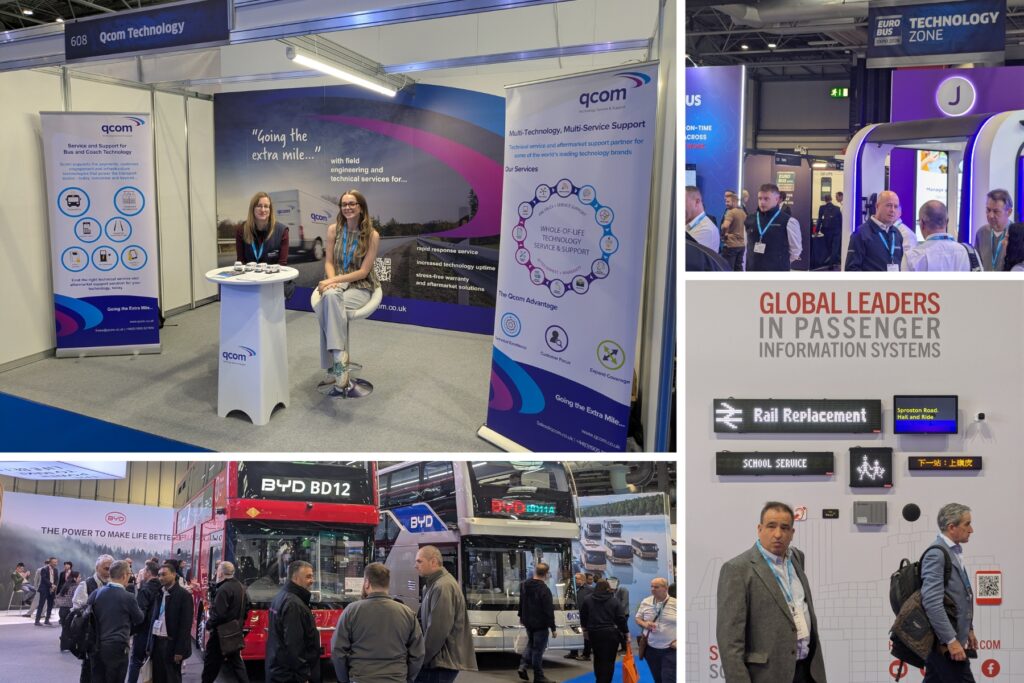
For Qcom, the show offered a chance to explore the technologies shaping passenger transport and discuss a practical question with manufacturers and operators: how do we turn these opportunities into systems working reliably across vehicles, depots and passenger networks?
The return of the Euro Bus Expo Innovation Challenge underlined the show’s emphasis on fresh thinking, inviting visitors to vote for the developments they believed could make the greatest difference to the industry.
The entries reflected an increasing focus on technology that goes beyond presenting information to helping people act on it. AI assistants from eCoachManager and Optibus targeted control-room and operational tasks, while Ferdia’s CoPlanner aimed to reduce dead mileage through better vehicle, trip and depot planning.
Passenger experience was another prominent theme. Masats’ AIDA used AI to respond to accessibility needs through automated doors and ramps, while TransMach Systems’ TM700 combined ticketing and operational functions. Elsewhere, Tenix Charge addressed the management of electric bus charging.
These were varied applications, but with a shared purpose: helping operators solve practical problems, use resources more effectively and improve the passenger journey.
That same focus was evident throughout the Euro Bus 2026 Technology Zone, where connected systems demonstrated how technology is changing both transport operations and the customer experience.
From ticketing and passenger information to vehicle monitoring and driver communications, what stood out was the sense of immediate possibility. Alongside emerging ideas were established technologies already in use, with the potential for much wider deployment.
Our conversations demonstrated a clear appetite among operators and transport authorities to put these capabilities to work. But they also highlighted the challenge of delivering that ambition.
For technology manufacturers, securing an order is a significant milestone, but it’s not the end point. Getting equipment installed, configured and commissioned across a dispersed fleet or network is a substantial undertaking in its own right. It requires specialist skills, coordinated logistics and installation schedules that work around operational demands.
This was a recurring theme in our discussions with technology OEMs and operators alike. Major projects are being commissioned, but delivery timetables can quickly come under pressure when the capacity to deploy equipment cannot keep pace. Moving from a successful trial or initial installation to a wider rollout creates a different set of resource and coordination requirements.
Qcom’s field engineering and project-delivery model is designed to help meet that challenge, giving technology manufacturers flexible access to the skills, processes and infrastructure needed to deliver installations at scale.
That can mean specialists working alongside an existing team, adding capacity or supporting a particular phase of deployment. It can also mean responsibility for a complete rollout, or a defined part of one, with project management, configuration, logistics, installation and commissioning brought together in a coordinated service.
The requirement will vary from project to project. In each case, the aim is to help manufacturers deliver on their commitments and enable operators to realise the benefits of their investment.
And implementation is only the beginning. Once systems are in service, effective technical support, preventative maintenance, repair and upgrades help protect their availability and the experience of the people who depend on them. Click here to read more about the implementation, service and support challenges of connected transport technology.
Euro Bus Expo demonstrated the ambition and ingenuity within the sector. Matching that innovation with the capacity to deploy and support it will be essential to turning possibility into everyday operational value.
Thank you to everyone who visited and met with us at Euro Bus Expo 2026. We look forward to exploring opportunities with many of you in the coming days, weeks and months. Or, to follow up on any of the issues raised at the event, in this review, or with your own connected transport technology challenges, click here to contact us today.
© 2026 Qcom Technology Ltd | Privacy and Cookie Policy | Website Design by The Leader Marketing Partnership